
Deep Reinforcement Learning for Last-Mile Routing in Dense Historic Urban Fabrics
Deep Reinforcement Learning for Last-Mile Routing in Dense Historic Urban Fabrics
Description
Details
Context and Problem Statement
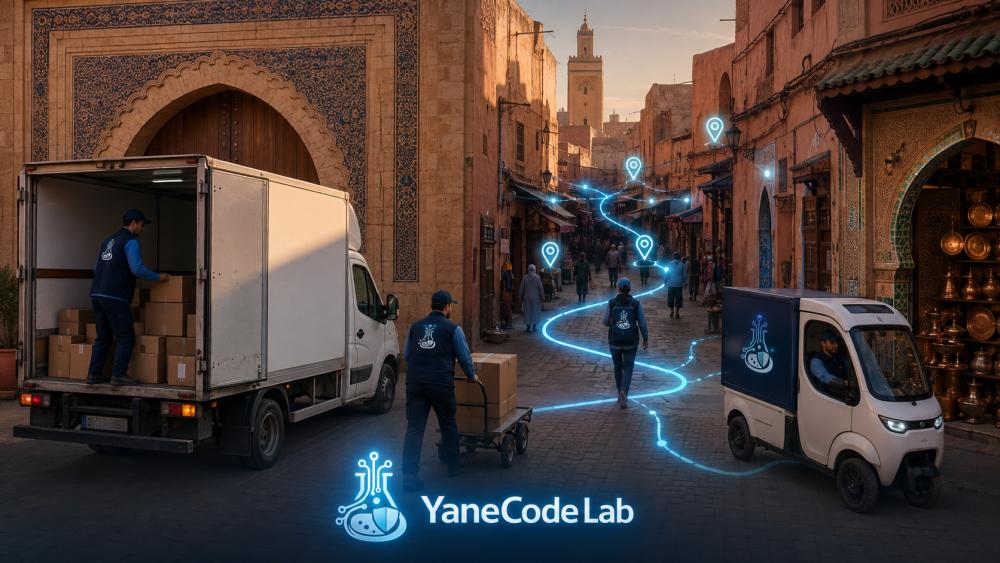
Classical vehicle-routing models assume road accessibility and relatively stable travel times. Historic medinas often require transshipment to pedestrian or low-capacity modes, with variable congestion and restricted access.
Research Question
Which learned policy formulation best handles the joint assignment of shipments to transshipment points and sequencing of pedestrian routes under uncertain travel times?
Proposed Approach
Formulate a two-echelon routing problem and solve it with an attention-based reinforcement-learning policy. Compare against metaheuristics, estimate pedestrian travel times from GPS and network topology, and incorporate time-dependent congestion.
Expected Contribution
A realistic benchmark for dense historic urban logistics and a rigorous comparison of learned and classical optimization methods.
Expected Prototype
A route planner generating courier itineraries and supporting intra-day replanning after delays or failed deliveries.
Datasets
OpenStreetMap, standard routing benchmarks, and anonymized delivery traces from a partner operator.
Challenges
Incomplete pedestrian maps, stochastic travel times, informal access constraints, and cross-city generalization.
Research Question
Innovation
Expected Deliverable
Technologies
Required Skills
- Operations Research and Combinatorial Optimization
- Reinforcement Learning
- Geomatics and Spatial Data Processing
- Software Development
Datasets
- OpenStreetMap pedestrian network
- Standard vehicle-routing benchmark instances
- Anonymized delivery traces from an operator